Dr. Aditi Jain, an Ayurveda doctor from Rajasthan, invites children into her garden for ten gentle evenings: the knowledge of life, the five elements, a daily routine, the six seasons, eating slowly, a humming bee breath and a good night's sleep.

Many families grow up with a little Ayurveda at home without ever calling it that. A grandparent who says "eat slowly, sit down", a pinch of turmeric in the dal, an early bedtime when the evenings turn cold. Children notice these habits long before they understand them. Ayurveda for kids is simply the chance to explain the "why" in words a five-year-old can hold.
That is exactly what Aditi's Garden does. It is a 10-episode series of Ayurvedic bedtime stories on My Sleepy Tale, written by Dr. Aditi Jain for children aged 4 to 7. Each episode is about three minutes long, takes place in the same quiet garden at dusk, and teaches one idea from the Ayurvedic tradition through two curious children, Tara and Veer.
This guide walks you through all ten episodes, the idea each one teaches, a line from each story in Dr. Aditi's own words, and a few simple daily-routine ideas you can try at home.
A gentle note for parents: Aditi's Garden is educational storytelling about the ideas and vocabulary of a traditional knowledge system. It is not medical advice, and it does not diagnose, treat or recommend remedies. If you have a question about your child's health, food, sleep, spices or herbs, please talk to your child's doctor.
Ayurveda is a traditional system of knowledge from India. The word itself is a lovely place to begin with children: it comes from two Sanskrit words, ayu, meaning life, and veda, meaning knowledge. Put together, Ayurveda means "the knowledge of life".
In Aditi's Garden, Ayurveda is introduced the way a child meets the world: by looking closely. Plants need water and sunlight to grow, and our bodies need food and sleep. People in India long ago watched nature, plants, food and the human body very carefully, and gathered what they learned. The series stays with the ideas that make sense to a young child:
For families looking for healthy habits stories for kids, this framing is helpful. Instead of rules ("go to bed!", "stop eating so fast!"), children hear a story about a garden where the flowers close their petals at night and a bee teaches a calm breath. The habit arrives wrapped in wonder.
Dr. Aditi Jain is an Ayurveda doctor from Rajasthan, India, and the creator of Aditi's Garden. In the stories she appears as herself, and the children in the garden call her Aditi Aunty. As she tells Tara and Veer in the very first episode, she loves to travel, listen to good music and spend time with nature, which is why every episode happens outdoors, among flowers, trees and singing birds.
Aditi's Garden is narrated by Dr. Aditi herself. Her episodes are never read by an AI voice: you hear her in her own voice, and families can also read along with the text together. You can find all her work on her creator page.
Every episode of Aditi's Garden follows the same calm shape, which makes it easy for children to settle:
Here is every episode, the Ayurveda idea it teaches, and a line from the story. Tap any title or cover to listen.
Tara and Veer meet Aditi Aunty on a warm garden step and ask their first big question. The answer is the root of everything that follows: ayu means life and veda means knowledge, so Ayurveda is the knowledge of life, gathered long ago by people in India who watched plants, food, nature and the body.
"Ayurveda means the knowledge of life."Dr. Aditi Jain, Episode 1Listen to Episode 1 ›
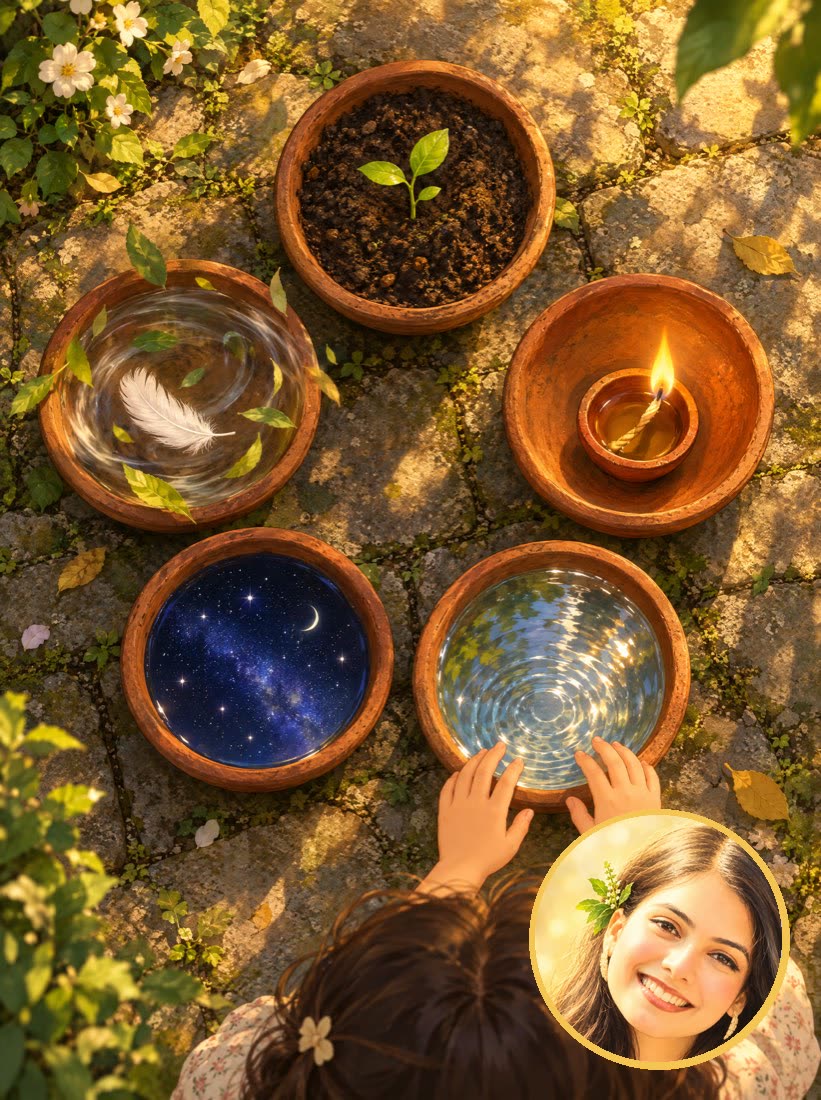
A breeze makes the leaves dance, and nobody can see who is moving them. Aunty introduces the five great elements: Prithvi (earth), Jala (water), Agni (fire), Vayu (air) and Akasha (space). Children can find every one of them in the garden, and later, in their own bedroom.
"Ayurveda uses these five great elements to understand nature and the human body."Dr. Aditi Jain, Episode 2Listen to Episode 2 ›

Under their favourite tree, the children learn about the three doshas through nature: Vata is like the wind (movement), Pitta is like warm sunshine (warmth and change, such as digesting lunch), and Kapha is like a strong trunk with deep roots (steadiness). Everyone has all three.
"Every person has all three, but the amounts can be different."Dr. Aditi Jain, Episode 3Listen to Episode 3 ›

Veer wakes up early, and Aunty shares the word for a daily routine: din means day and charya means routine. The morning she describes is one any family can try: wake at a regular time, stretch like a tree, brush teeth, wash your face, enjoy breakfast, play, drink water and spend time outdoors.
"Healthy living begins with small habits that we follow every day."Dr. Aditi Jain, Episode 4Listen to Episode 4 ›

The garden moves into the kitchen, full of little bowls of colour. The children meet turmeric (Haridra), fresh ginger (Ardraka) and cumin (Jeeraka), spices used in Indian kitchens for generations. Aunty also teaches a kind safety rule: spices go into food in small amounts, and children always ask an adult before trying anything new.
"Every kitchen has little stories hidden inside it."Dr. Aditi Jain, Episode 5Listen to Episode 5 ›

Why do some trees bloom while others rest? Classical Ayurveda names six seasons: Vasanta (spring), Grishma (summer), Varsha (rains), Sharad (autumn), Hemanta (early winter) and Shishira (late winter). Children learn that habits can change with the weather: water and shade in summer, warm clothes and warm food in winter.
"Ayurveda describes six seasons, and our routines can change with nature."Dr. Aditi Jain, Episode 6Listen to Episode 6 ›
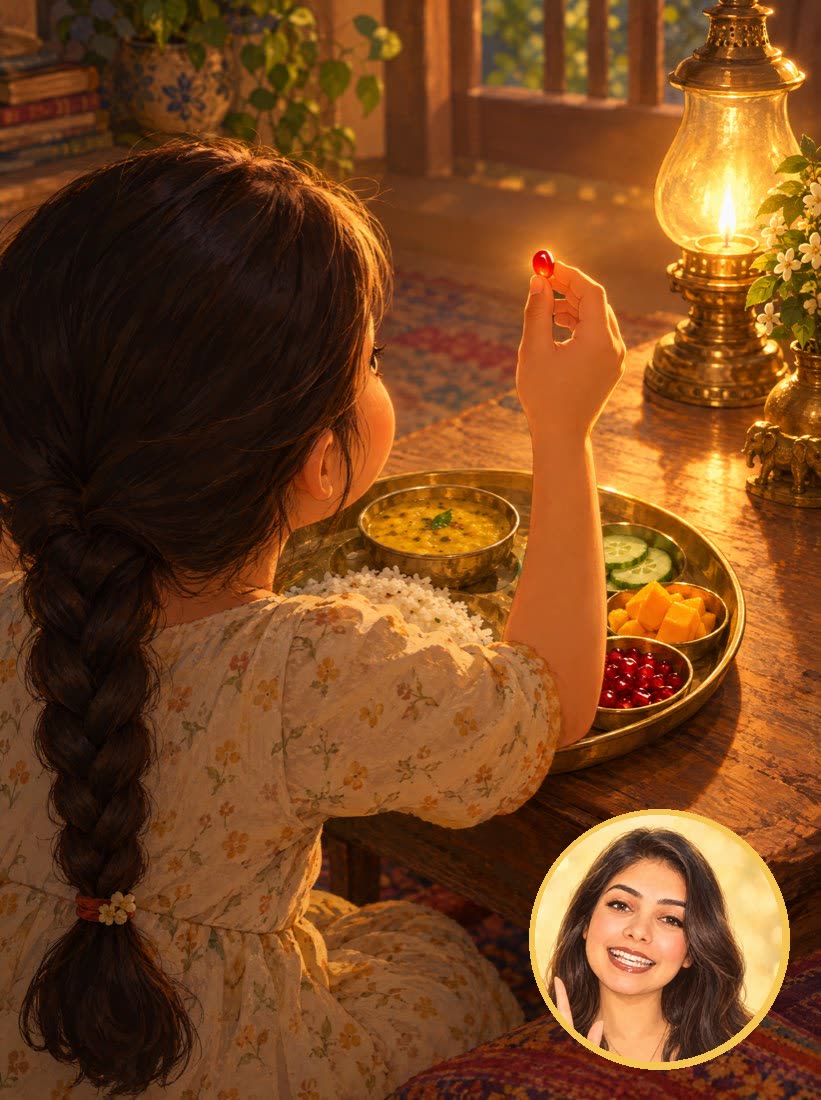
Tara and Veer arrive hungry, and Aunty turns dinner into a small adventure. Sit comfortably, look at the colours, smell the food, chew well and enjoy each taste. She adds a lovely idea for little eaters: listen to your tummy when it is hungry and when it is full.
"Enjoy a variety of foods, and listen to your tummy when it says it is hungry, and when it says it is full."Dr. Aditi Jain, Episode 7Listen to Episode 7 ›
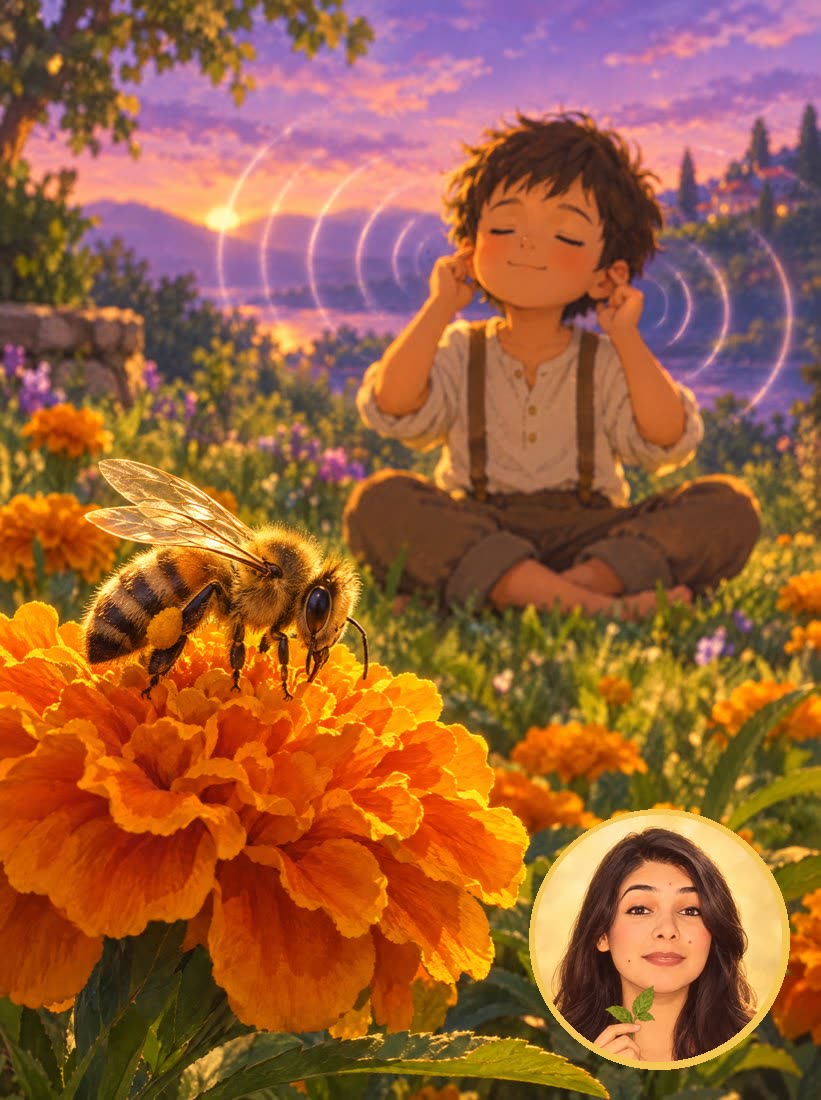
A bee buzzes past, and Aunty shows a soft version of Bhramari Pranayama, a traditional yogic breathing practice named after a bee. Breathe in gently through the nose, then hum on the way out: mmmmm. It is done comfortably, never forced, and with an adult nearby.
"Remember, we do not need to hum loudly or force our breath."Dr. Aditi Jain, Episode 8Listen to Episode 8 ›
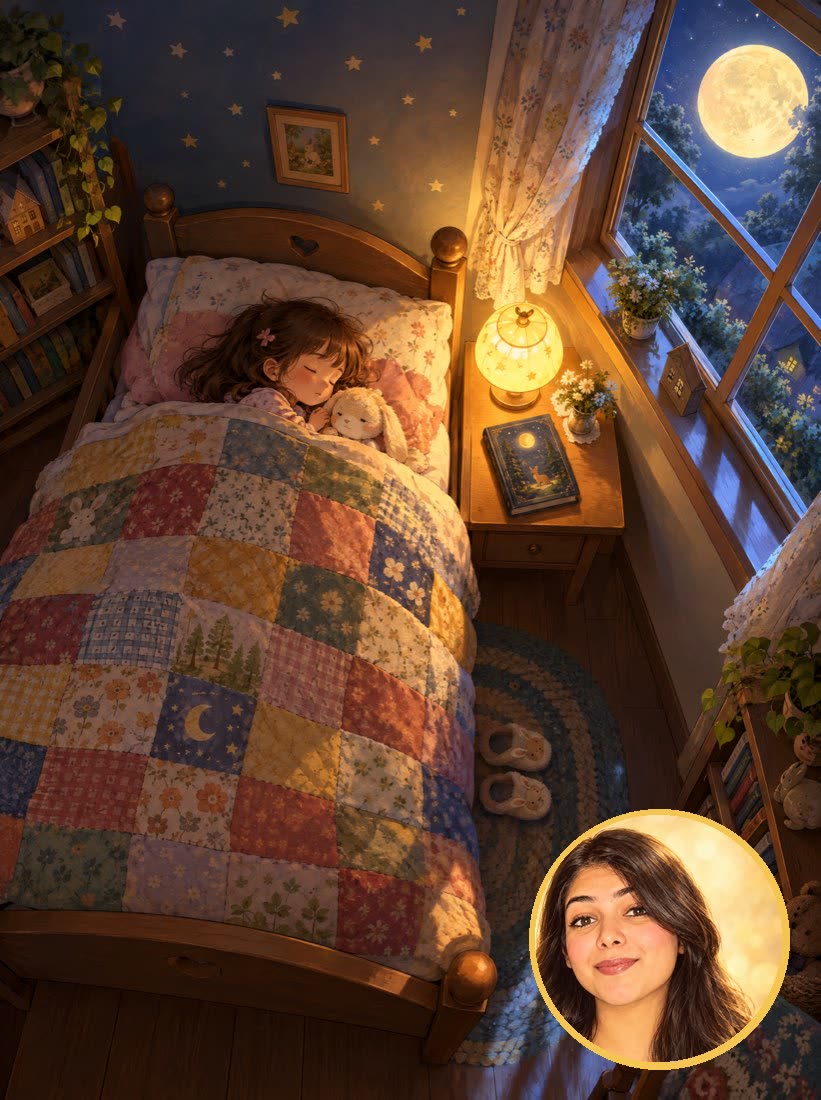
As the flowers close their petals, the children ask why everyone feels sleepy when it gets dark. Aunty explains that sleep, Nidra, sits beside food and balanced living in Ayurveda, then builds a bedtime routine with them: finish play, brush teeth, comfy clothes, screens away, a gentle story and regular sleep and wake times.
"It is thought of as one of the three pillars of life, along with food and wise, balanced living."Dr. Aditi Jain, Episode 9Listen to Episode 9 ›

On the last night, Tara and Veer remember everything: the knowledge of life, the five elements, the three doshas, Dinacharya, the spices, the six seasons, eating slowly, the bee breath and sleep. Aunty's final lesson is about little things, and about caring for nature, because we are a part of it.
"Ayurveda is a beautiful tradition of knowledge that teaches us to understand life and care for ourselves."Dr. Aditi Jain, Episode 10Listen to Episode 10 ›
Dinacharya (din, day, and charya, routine) is the Ayurvedic idea of a daily routine. You do not need special products or a strict schedule to bring its spirit home. These ideas come straight from the habits Aditi Aunty shares with Tara and Veer across the series:
A few tips that make these stick:
Bedtime is when children are most ready to listen, and a short, predictable story helps the day wind down. Aditi's Garden is built for that moment. The voice is calm, the setting is always the same quiet garden at dusk, and the closing lines invite a slow breath in and out.
It is also a gentle way to share Indian stories for kids with children who may be growing up far from India, or who have never been. Sanskrit words, Indian spices and the six seasons of classical Ayurveda arrive inside a warm story, and children of every background are welcome in the garden. If your family enjoys these, you may also like our Indian bedtime stories and our guide to screen-free bedtime routines.
Ayurveda comes from two Sanskrit words: ayu, meaning life, and veda, meaning knowledge. So Ayurveda means "the knowledge of life". It is a traditional system of knowledge from India about our bodies, our food, our daily routines and nature. Aditi's Garden explains it in calm, three-minute bedtime stories for ages 4 to 7.
Dinacharya is the Ayurvedic idea of a daily routine: din means day and charya means routine. For children it can be as simple as waking up at a regular time, stretching, brushing teeth, washing their face, eating breakfast, playing actively, drinking water, spending time outdoors and going to bed at a steady time. Episode 4 of Aditi's Garden is all about it.
No. Aditi's Garden is a set of educational bedtime stories about ideas and habits from the Ayurvedic tradition. The stories do not diagnose, treat or recommend remedies. For any question about your child's health, food, sleep, spices or herbs, please talk to your child's doctor.
The series is written for ages 4 to 7. Each of the 10 episodes is about 3 minutes long, so it fits easily into a bedtime routine, one episode a night.
The stories are written by Dr. Aditi Jain, an Ayurveda doctor from Rajasthan, India. Her episodes never use an AI voice: they are read in her own voice, and families can also read along with the text together.
Not at all. Aditi's Garden is made for every family. Ideas like a steady routine, noticing the seasons, eating slowly, a calm breath and a good night's sleep belong to everyone, and the series is a gentle first window into Indian culture and Sanskrit words.
Open mysleepytale.com/series/aditis-garden and start with Episode 1, Aditi Aunty's Magical Garden. The episodes are connected, so each one ends with a small question that the next one answers.
Ten calm evenings with Dr. Aditi Jain, about three minutes each, for ages 4 to 7. Start with Episode 1 and let Tara and Veer's questions lead the way.
Listen to Aditi's GardenEnjoyed this? Like it or share it with another parent.
 My Sleepy Tale