Discover Canada: Bedtime Stories and Facts for Kids
Beavers, the CN Tower, puffins and snowflakes, told as calm Canadian bedtime stories for ages 4 to 8, with a map, a quiz and a few true facts to play with before sleep.

What is Discover Canada?
Discover Canada is a free series of Canadian bedtime stories on My Sleepy Tale, made for children aged 4 to 8. Each story is short, soft and slow, and each one is built around something real: a river, a tower, a seabird, a snowflake. The idea is simple. A child hears a gentle story, then wakes up with one true thing to say at breakfast.
The series began with five short "tour" episodes about Canada's land, history, places, culture and surprising facts. Four newer stories were written by Roli, who publishes on our platform, and they turn single ideas into full bedtime tales with a feeling at the centre: courage, teamwork, wonder and patience.
Everything on this page can be read with the sound off, and the stories can be played with the screen off. Tap play, put the device down, and listen together.
Meet the stories
Press play on any of the four newer episodes right here, or open the full Discover Canada series page for all nine.
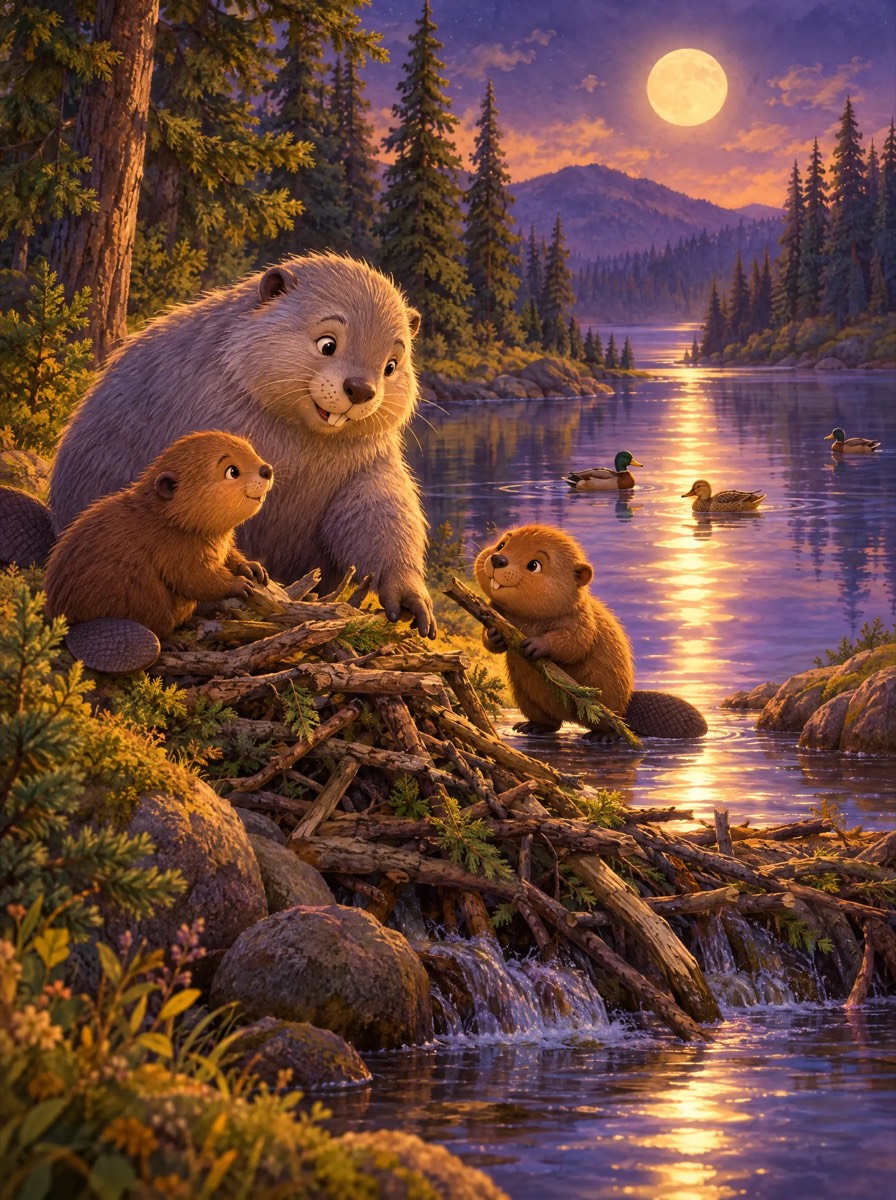
The Beaver Builders Club
A gentle tale about courage, teamwork and caring for rivers. Pip is nervous about carrying a big branch, until a friend swims up beside him.

The Friendly CN Tower Giant
A gentle giant high above Toronto sits with a worried girl and shows her that courage is one small step, taken while the tummy flutters.
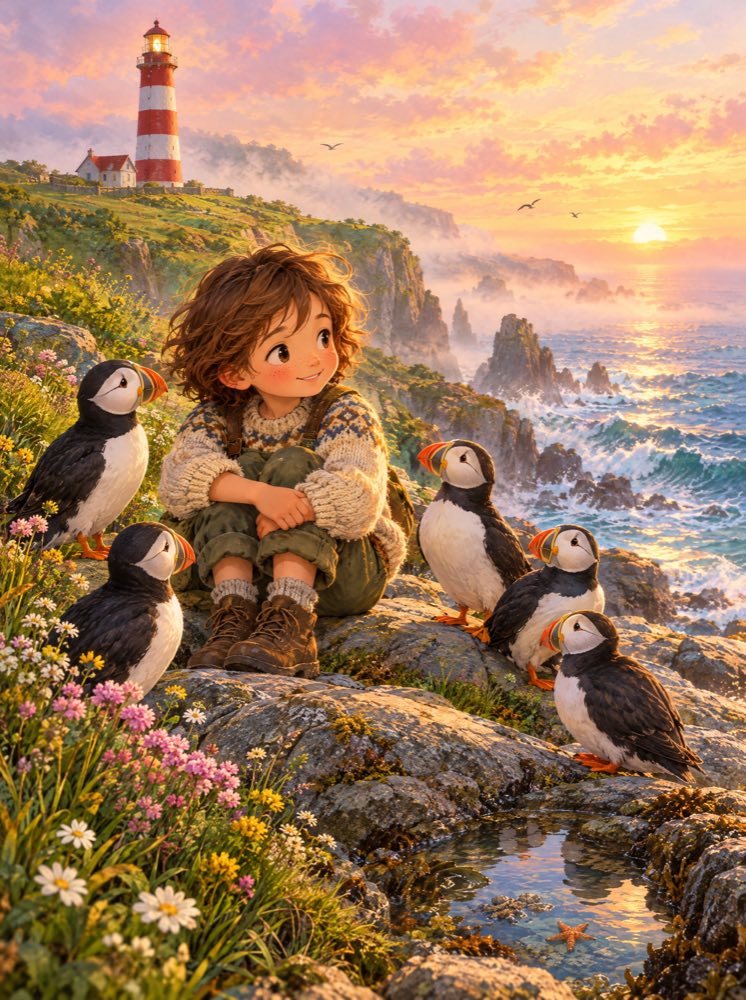
Puffin Patrol on the East Coast
A gentle Atlantic Canada journey of brave little puffins and one small, curious child.
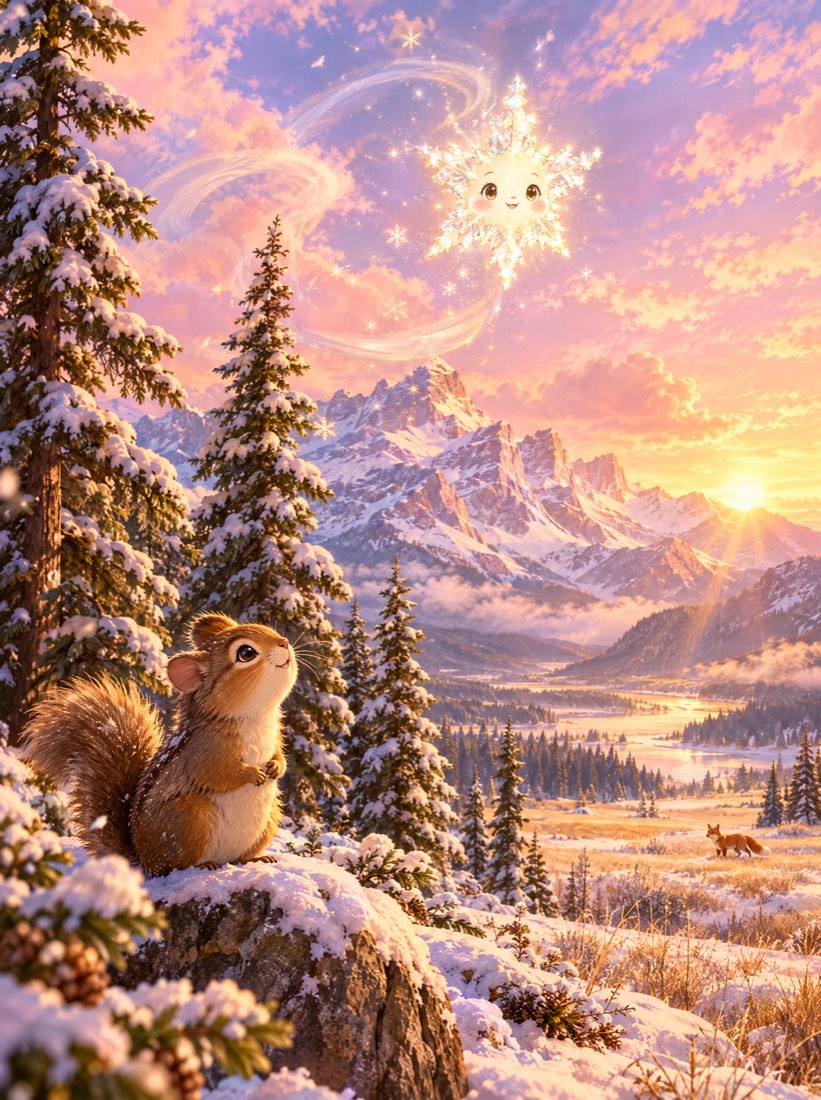
Snowflake's Big Journey
A winter story that follows one snowflake from the cloud to the ground. Good for the first snowfall of the year.
The five original tour episodes are also in the series:
- Episode 1: The Land of Canada
- Episode 2: Stories From Long Ago
- Episode 3: Wonders of Canada
- Episode 4: Maple Syrup, Hockey & Kindness
- Episode 5: Amazing Canada
A map of Canada
Canada has 10 provinces and 3 territories. Here they are grouped into six big regions. This is a simple drawing, not a real map, so use it to wander, not to navigate. Tap a region (or press Tab and Enter) to open its card.
Pick a region
Tap any region on the drawing to see one true fact and a story to listen to.
- British Columbia. A Pacific province. A story from here is coming soon. In the meantime, Episode 1, The Land of Canada flies over the whole country.
- The Prairies. Alberta, Saskatchewan and Manitoba are three of Canada's 10 provinces. No full story yet; Episode 5, Amazing Canada visits the Alberta badlands.
- Ontario. Home to Toronto and the CN Tower, 553.3 metres tall. Listen to The Friendly CN Tower Giant.
- Quebec. One of Canada's 10 provinces. A story from here is coming soon; Episode 4 talks about French in Québec.
- Atlantic Canada. Home of Witless Bay, with more than 260,000 pairs of Atlantic puffins. Listen to Puffin Patrol on the East Coast.
- The North. Canada's three territories are Yukon, the Northwest Territories and Nunavut. A story is coming soon; Episode 5 mentions Nunavut.
Canadian animals, and a quiz
Our stories borrow real Canadian animals and real places. The beaver became an official symbol of Canadian sovereignty on March 24, 1975. It appeared on Canada's first postage stamp, the Threepenny Beaver, in 1851, and it has been on the 5-cent coin since 1937. In the stories, beavers are builders who look after the river for everyone, from fish and turtles to ducks.
The Atlantic puffin is the official bird of Newfoundland and Labrador. The Witless Bay Ecological Reserve, about 35 km from St. John's, holds North America's largest Atlantic puffin colony, with more than 260,000 pairs. Puffins visit in the seabird season, roughly the spring and summer.
In both stories, the animal is brave in a quiet way: one small step, with a friend close by. That is the feeling we want a child to fall asleep with.
Animal and place match quiz
Question 1 of 5
Who builds dams that keep the water calm?
How tall is the CN Tower?
The CN Tower in Toronto is 553.3 metres (1,815 feet) tall. It opened to the public on June 26, 1976, and was built by Canadian National. Its main observation deck is at 346 metres. It was the world's tallest freestanding structure until the Burj Khalifa, which is 828 metres. Slide to climb.
Climb the CN Tower
You are at the bottom. The story giant is waiting far above you.
Sources: CN Tower on Wikipedia.
Seasons in Canada
Canadian children live by the seasons, and so do the stories. Spring and summer are for puffins and rivers. Autumn is for walks under big trees. Winter is for snow, and snow has a bedtime story of its own.
In Snowflake's Big Journey, a snowflake begins when a tiny supercooled droplet freezes onto a speck of dust. As it falls, water vapour freezes onto it, and it grows. Snow crystals have six sides because of how water molecules bond. People often say that no two snowflakes look exactly alike, and it is a lovely thing to wonder about at the window. The science comes from NOAA.
Fact or story?
Children love to ask "is that real?" Tap a card to find out. It is a small way to practise telling the true from the pretend, which is a skill for life.
For newcomer families and Canadians abroad
If your family is new to Canada, Discover Canada is not a test, and nobody needs to "pass" it. It is a way to belong a little more, one quiet evening at a time. A child can hear the names of places they will see on a school trip, hear what a CN Tower is before they stand under it, and feel that this country has room for them.
The language is plain and slow, which helps children (and parents) who are still growing into English. Listen together, pause to talk about a word in your own language, and pick the next story by what you both feel like. Our multilingual bedtime stories page explains how other languages work on the platform.
It also works the other way. Canadian families living abroad can use these stories to keep a thread to home for children who may never have seen a beaver, a snowfall or the Toronto skyline. If you are looking for a Toronto-based platform to start with, see our guide to the best bedtime stories in Toronto.
Honouring the land and its first peoples
Indigenous peoples have cared for the land we call Canada for thousands of years, and First Nations, Inuit and Métis communities are here today, living, teaching and telling their own stories. We are a Toronto family company, and we want to say that plainly.
Our stories do not retell sacred stories, and we do not invent "Indigenous-sounding" tales. Those stories belong to the people who carry them. If you would like your child to hear them, please look for books, audio and teachings by First Nations, Inuit and Métis authors and storytellers, and ask your local library or school for recommendations.
We have chosen not to name specific nations in this post. We are happy to be corrected, and we welcome guidance at hello@mysleepytale.com.
Frequently asked questions
What age are the Discover Canada stories for?
They are written for children aged 4 to 8. The language is soft and slow, and every story ends with a calm goodnight.
Are these Canadian bedtime stories free?
Yes. Discover Canada is free to listen to on My Sleepy Tale.
Who wrote the stories?
The first five tour episodes are part of the original series. The four newer stories (the beavers, the CN Tower giant, the puffins and the snowflake) were written by Roli, who publishes on our platform.
Are the facts true?
The facts on this page come from public sources linked in the text. The characters, such as Fenwick the giant and Bramble the beaver, are pretend, and our fact-or-story cards say which is which.
Why is the beaver a Canadian symbol?
The beaver became an official symbol of Canadian sovereignty on March 24, 1975. It also appeared on Canada's first postage stamp in 1851 and has been on the 5-cent coin since 1937. The Royal Canadian Mint tells the story in its legacy of the beaver article.
More sources: Witless Bay Ecological Reserve (Government of Newfoundland and Labrador).
Start listening
Begin with the story that matches your child's mood tonight: a brave beaver, a kind giant, a puffin patrol, or a snowflake.
Open Discover Canada