Voice Postcards for Kids: Postcards Are Back, in Their Own Voice
A picture on the front, a little voice on the back. Here is where postcards came from, why they are making a comeback, and how a child can send one today.
Remember the postcard?
A picture of somewhere far away. A stamp. A few handwritten lines on the back that said, "Wish you were here." Then it sat on a fridge for a year.
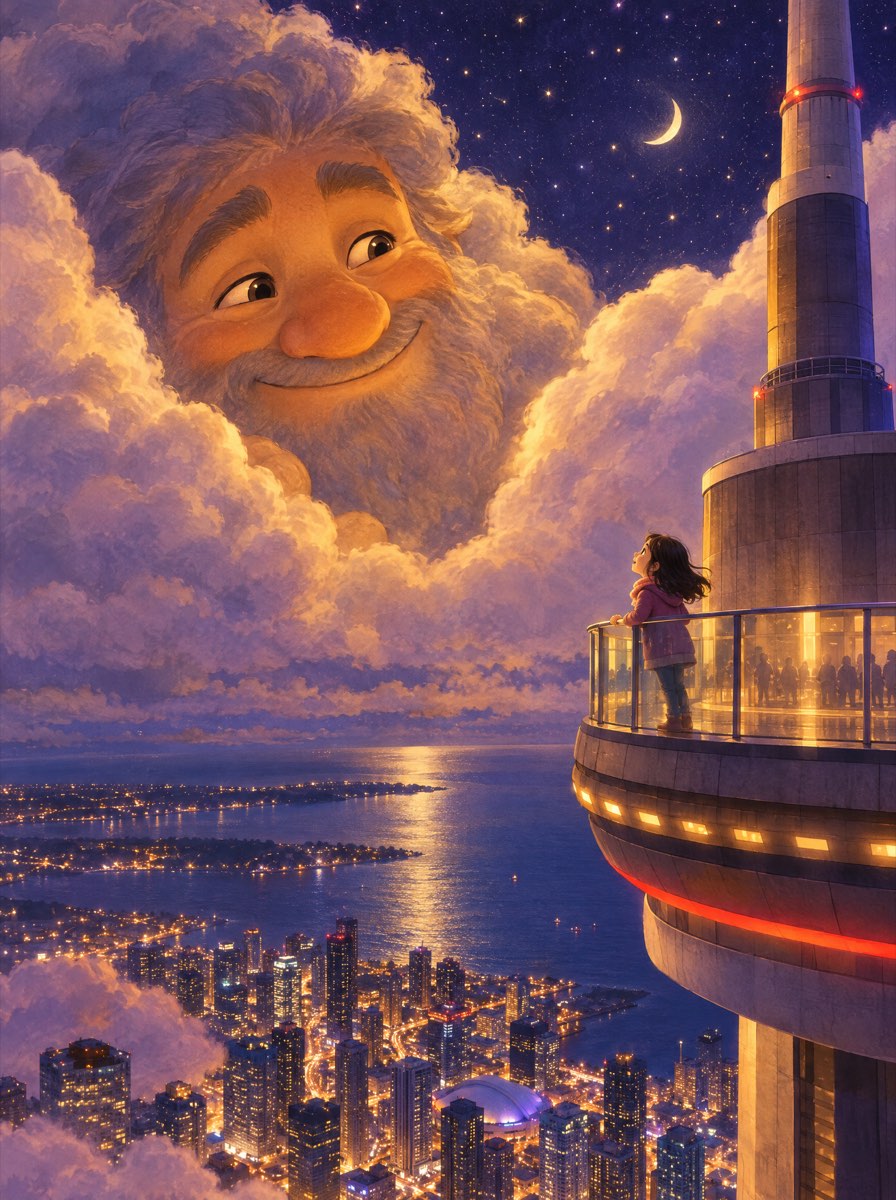
Now picture the same thing for a six-year-old who cannot write a full sentence yet, whose grandparents live eleven time zones away. Instead of lines on the back, there is a voice: giggles, a half-finished story about the CN Tower, and a very serious "I love you, Nani."
That is a voice postcard for kids. The child picks a picture, records up to 90 seconds in their own voice, and a parent emails it. The grandparent or friend opens it, sees the picture, hears the voice, and can answer in their own voice too. Try the card below. Tap it, or press Enter, to flip it.
Flip the postcard
To: Nani
Dear Nani, today I saw the CN Tower. It is so tall I had to tip my head all the way back! I miss you. Love, Aanya
Tap the card to flip it. This is an example, not a real message.
An example postcard: the picture side, then the message side.
A short history of the postcard
The postcard is younger than most people think, and it changed a few times before it became the one we remember. Scroll the timeline sideways, or use the arrow keys once it has focus.
- 1869
The first official postcard
On 1 October 1869, Austria-Hungary issued the first official postcard, the Correspondenz-Karte.
Source: Smithsonian Institution Archives - 1871
Canada's first postal cards
On 1 June 1871, Canada issued its first postal cards: plain cards that cost one cent to send.
Source: Lynn Museum - 1898
Private mailing cards
In May 1898, the United States allowed "private mailing cards", so companies other than the post office could print their own cards with pictures.
Source: WVU Libraries - 1907
The divided back
On 1 March 1907, the United States allowed the "divided back": message on the left, address on the right. That left the whole front for a picture and began what collectors call the Golden Age of postcards, which ran until the First World War.
Source: Smithsonian Institution Archives - Today
The postcard learns to talk
On 24 October 2026, My Sleepy Tale opened voice postcards: pick a picture, record up to 90 seconds, and a parent emails it.
See voice postcards
History sources: the Smithsonian Institution Archives, the Lynn Museum and WVU Libraries pages linked above.
Why they faded
Postcards did not disappear in one day. Phones, then text messages and email, made it faster to say hello, and a quick message stopped needing a stamp. We will not put a date on it, because the story is gradual. What we can say is that a typed message is quick, and a postcard takes a little care. That care is exactly why some people are bringing them back.
Why they are coming back
Slow, hand-made, personal things are having a moment. A Pinterest 2026 forecast, as reported by PG Buzz, lists "snail mail gifts" up 110% and "penpal ideas" up 90% in searches (pgbuzz.net). Local news outlets, such as WCAX in May 2026, have also covered the pen-pal revival. We cite those numbers as their sources report them, not as our own research.
Many families do not live near the grandparents, cousins or old friends they love. A postcard makes a small moment feel like a gift. A voice postcard adds the thing a photo and a text cannot: how your child actually sounds today.

What kids gain
We are not going to quote studies here. We can describe the experience.
- Speaking practice. Saying a thought out loud to someone you love, and trying again if it did not come out right.
- Writing and storytelling practice. Older kids can plan three sentences first, then say them. Try the 30-second prompts further down.
- Staying close to grandparents. A voice from far away, arriving as a small surprise, is something to replay.
- Curiosity about places. Choosing a picture means asking, "Where is this? What would I tell someone about it?"
A voice beats handwriting for little ones
A four-year-old has plenty to say and little ability to write it down. With a voice postcard, nobody has to wait for spelling. The child talks, and the card keeps the exact way they said it, including the pauses and the laughing. Years later, that recording of a small voice is the part families tend to treasure.
Greetings for Diwali, Christmas and Halloween
Cards were made for the calendar. Everyday templates are free. We also have seasonal templates, including Halloween and Diwali. The Halloween template uses a postcard credit (a pack of 3 is CA$4.99). A child can send a Diwali hello to a nani across the world, or a spooky-but-not-scary Halloween message to a best friend.

If your child loves telling Halloween stories, we also have a free Halloween story contest for Greater Toronto Area kids.
Design your postcard
Pick a picture, a stamp and a greeting. The postmark always says TORONTO, with today's date. Nothing you choose here is sent or stored. It is only a preview.
Send one in 4 steps
You can start on our postcards page. If you want the bigger idea behind it, read bedtime stories in your own voice.
Memories
When a friend replies, the conversation is kept as Memories for both children: the postcard, the answer, the next one. It becomes a little audio scrapbook that grows over the year. It also works well for grandparents: hear why a grandmother's voice matters in our post about grandma's voice, bedtime stories and memories.
Safe by design
- A parent sends the card. It is emailed to the person you pick, not posted anywhere.
- No public feed. Nobody can browse other families' cards.
- Replies are only seen by the sender.
Read more in our privacy policy.
Write a postcard in 30 seconds
Staring at a blank card is the hardest part. Pick who it is for and a place or season, then shuffle three ways to start. Press start and say it out loud before the ring runs out.
The 30-second postcard
Press "Shuffle" to get three ways to start.
10 things to say in 30 seconds
- Hello, and who you are.
- Where you are right now.
- One thing you saw today.
- Something that made you laugh.
- Your favourite food this week.
- Something you learned.
- A question for them ("What did you do when you were my age?").
- A tiny joke.
- What you want to do together next time.
- "I love you", and goodbye.
FAQ
What is a voice postcard for kids?
A voice postcard is a postcard where the child picks a picture and records a short message in their own voice, up to 90 seconds on My Sleepy Tale. A parent emails it, and the person who opens it can see the picture and listen to the voice.
Who can my child send a voice postcard to?
Anyone a parent chooses to email it to, such as grandparents, cousins or friends. There is no public feed. The parent sends the card, and a reply is only seen by the person who sent the card.
Is it free?
Everyday postcard templates are free. The Halloween template uses a postcard credit, and a pack of 3 credits is CA$4.99.
How long can the message be?
Up to 90 seconds. That is long enough to say hello, tell one small story and send a hug. Our 30-second prompts below are a good way to start.
Is it safe for children?
A parent sends the card by email, so it only goes to people you pick. There is no public feed and nothing is posted for strangers to find. Replies are only seen by the sender. See our privacy policy for details.
When was the first postcard sent?
The first official postcard was issued in Austria-Hungary on 1 October 1869. Canada issued its first postal cards on 1 June 1871, plain cards that cost one cent. See the timeline above for the sources.
Send a voice postcard
Pick a picture, say a few words, and let a parent email it. Everyday templates are free.
Make a postcard