Send a little thankfulness, share a lot of love. A simple, screen-free Thanksgiving idea: your child says thank you in their own voice, and a grandparent, teacher or friend hears it, keeps it, and answers back.
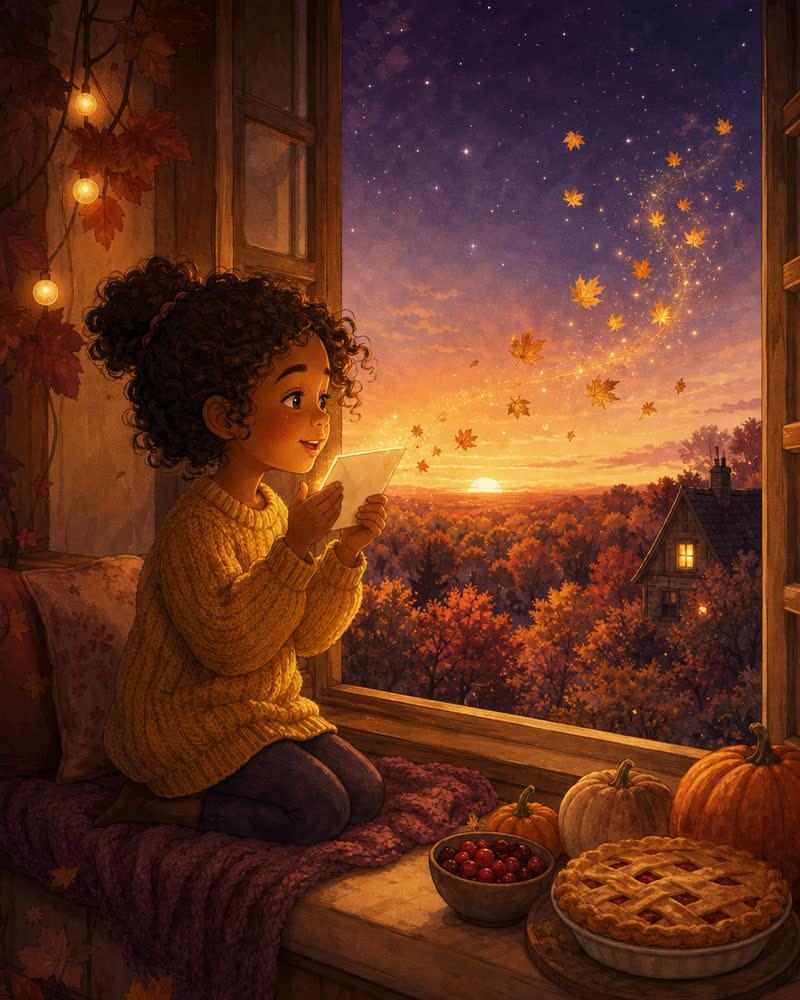
Every year we look for Thanksgiving activities for kids that mean something. Crafts get tidied away. Hand turkeys get lost behind the fridge. What families tend to keep, and replay for years, is something much smaller: a recording of how a child sounded when they were six, saying "Thank you, Grandma, for teaching me to make the pie."
That is the idea behind our Thanksgiving voice postcard. A child picks a picture, records a thank-you in their own voice, and a grown-up emails it to someone the child is thankful for. The person who opens it sees the card, hears the voice, and can reply in their own voice too.
This Thanksgiving: every family that signs in on mysleepytale.com gets 5 free Thanksgiving postcards, from Monday, November 16 to Monday, November 30, 2026 (11:59 pm Toronto time). Everyday postcards are always free.
Gratitude is easy to talk about and harder to practise. Most gratitude activities for kids ask children to write a list, and for a four-year-old, writing is the hard part. Speaking is not. A child who can barely spell "Grandpa" can tell him, clearly and with feeling, why they love fishing with him.
If you want the longer story of how postcards began and why they are coming back, read Voice Postcards for Kids: Postcards Are Back, in Their Own Voice. This guide is about Thanksgiving: who to thank, what to say, and how to send it.
The whole thing takes about five minutes. A grown-up handles the sign-in and the sending, and the child does the part that matters: the talking.
Ask one question at dinner or in the car: "Who do you want to say thank you to this year?" Children often surprise us. Some ideas: Grandma or Grandpa, a parent who works late, a teacher, a best friend, a kind neighbour, an aunt who always sends books, a coach, or a cousin they only see once a year.
Go to mysleepytale.com/postcards and tap Make a Thanksgiving postcard. A grown-up signs in with Google, Apple or an email code. Your family's 5 free Thanksgiving postcards are added the first time you send one.
Choose our painted Thanksgiving picture, or add a family photo: last year's dinner table, a walk through autumn leaves, a drawing your child made for the person they are thanking.
Your child records up to a minute and a half, in any language. Most thank-yous land between 20 and 40 seconds, which is just right. If the first try is shy, listen together, smile, and record again. A parent approves every recording before it goes anywhere.
Add the email address of the person you are thanking and send. Only that email address can open the postcard. There is no public feed and nothing is posted for anyone else to find.
The person you thanked gets an email with a link. They sign in to open the postcard, which keeps it private to them, and they can listen as many times as they like. Then they can record a reply in their own voice. The postcard and the answer are kept together as Memories, a small audio scrapbook that grows each time you send another.
A blank microphone can feel big. Our Thanksgiving page offers four simple starters: "Thank you for…", "I love it when we…", "My favourite memory with you is…" and "You make me feel happy when…". Here is how to stretch them for different ages.
Keep it to one sentence and a goodbye. Let them say it their way, even if the grammar wobbles. That is the part grandparents love most.
Children this age can tell a tiny story. Try a three-part shape: who you are thanking, one memory, and how it made you feel.
Older children can plan three sentences on paper, then say them out loud. This is good speaking and writing practice that does not feel like homework.
Parents can send one as well. A thank-you from you to your own parents, recorded with your child giggling in the background, is a gift that says more than a text message ever could.
The recording takes a minute. The gratitude around it can fill an afternoon, mostly away from screens.
For many families, Thanksgiving is the holiday when the distance shows. Grandparents are a flight away, or in another country and another time zone. A phone call at the wrong hour is hard to arrange, and a video call with a wriggly child can be over in ninety seconds.
A voice postcard waits for them. They can open it with their morning coffee, play it twice, and save it. When they reply, your child gets to hear their voice saying thank you back, which is often the moment children ask to send another one.
If you have ever wished you could keep a grandparent's voice for the future, our post on Grandma's voice, bedtime stories and memories is worth a read. And if grandparents would like to go further, they can record whole bedtime stories too: see bedtime stories in your own voice.
US Thanksgiving is on Thursday, November 26, 2026, and the 5 free Thanksgiving postcards run from November 16 to November 30, so there is time before the day and a few days after for the thank-yous that come later. The Thanksgiving card carries a US flag stamp.
Canadian Thanksgiving was on Monday, October 12, 2026. Canadian families are welcome too: any family that signs in gets the 5 free Thanksgiving postcards, which are perfect for cousins, grandparents and friends celebrating in the United States. And gratitude has no season. Everyday postcards are free all year, so a thank-you to a teacher or a neighbour can go out any day.
We built postcards for families first, so privacy is part of how they work, not an add-on.
You can read more in our privacy policy.
Once the leaves are down, new painted cards arrive in their own season: Season's Greetings, Happy Holidays, December to Remember and New Year. If your child loved sending a thank-you, a winter hello is a natural next one.



It is a postcard with a picture on the front and a child's own voice on the back. On My Sleepy Tale, a child picks the painted Thanksgiving picture or a family photo, records a thank-you of up to a minute and a half, and a grown-up sends it by email to someone the child is thankful for.
Yes. Every family that signs in with Google, Apple or an email code gets 5 free Thanksgiving postcards between Monday, November 16 and Monday, November 30, 2026 (11:59 pm Toronto time). Everyday postcards are always free.
Up to a minute and a half. Most thank-yous are 20 to 40 seconds, which is plenty for a hello, one memory and a goodbye.
An email address. They get an email with a link, sign in to open the postcard, and can listen as many times as they like. They can then record a reply in their own voice.
Postcards are private. Only the email address a grown-up adds can open the postcard and reply, and a parent approves every recording. Nothing is posted to a public feed.
Yes. Children can say thank you in any language, which is a lovely way to speak to grandparents in the language of home.
Yes. Canadian Thanksgiving was on Monday, October 12, 2026, and this campaign runs around US Thanksgiving on Thursday, November 26, so the Thanksgiving card carries a US flag stamp. Any family that signs in gets the 5 free Thanksgiving postcards, which work well for cousins, grandparents and friends in the United States. Everyday postcards are free all year for a thank-you to anyone.
Free Thanksgiving postcards that have not been sent end with the campaign. Everyday postcards stay free, and winter cards such as Season's Greetings, Happy Holidays, December to Remember and New Year appear in their own season.
Pick a picture, say thank you in your own voice, and let a grown-up send it. Every family gets 5 free Thanksgiving postcards until Monday, November 30.
Make a Thanksgiving postcardEnjoyed this? Like it or share it with another parent.
 My Sleepy Tale